

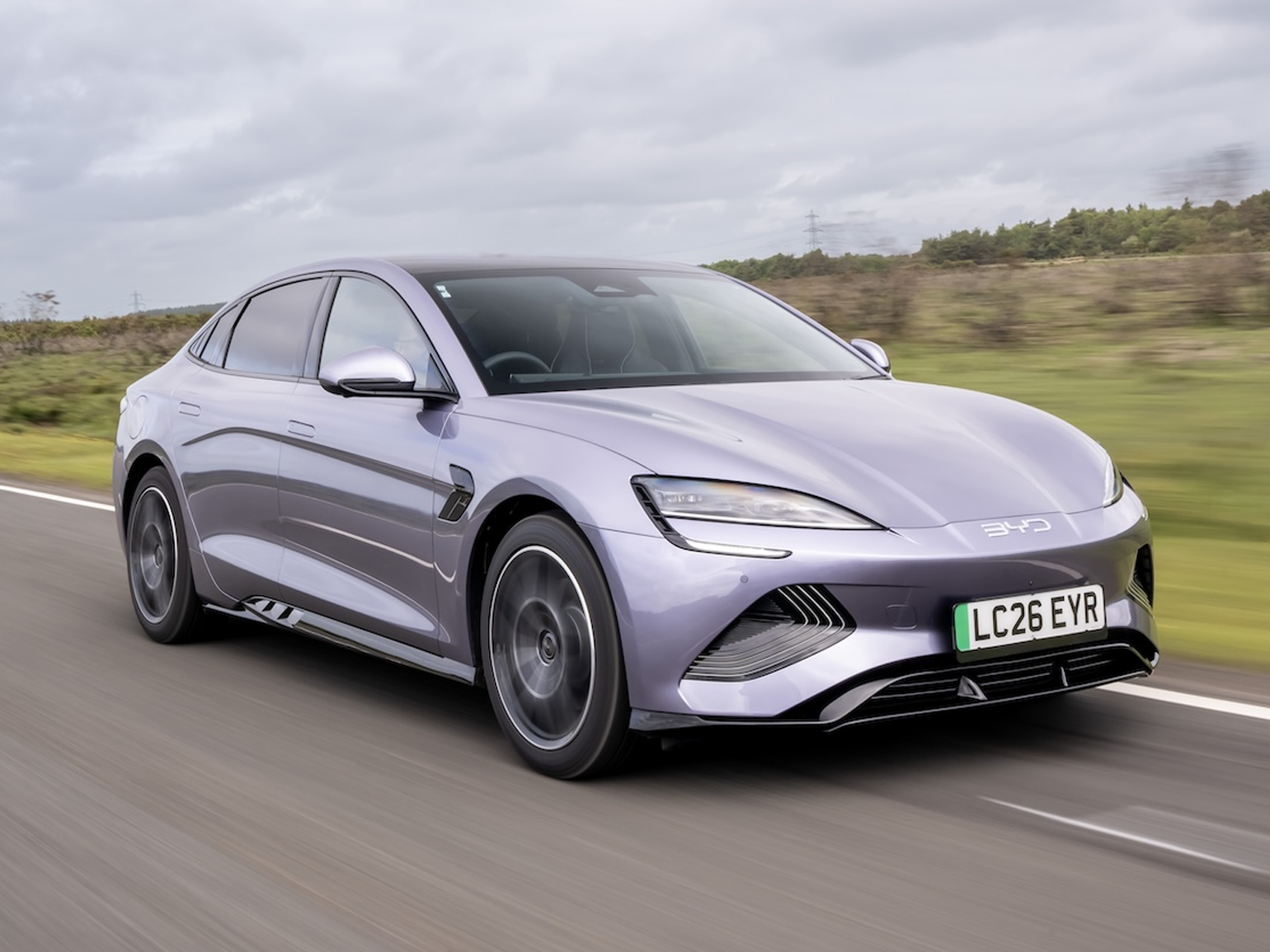
From newcomers to fleet players: the rise of Chinese car makers
Published 4th August 2026
Chinese automotive brands have moved from fringe newcomers to serious contenders in an astonishingly short period of time. In April 2026, Chinese-owned manufacturers took more than a fifth of the UK new-car market, and their year-to-date share is hovering around 20%. For fleet operators, leasing companies and business users alike, the question is no longer whether Chinese OEMs are relevant, it’s whether they’re suitable for a long-term fleet choice, and whether the growing consumer resonance translates into sustainable fleet confidence.
The answer, based on the latest industry data, is increasingly yes. But it’s a nuanced picture, shaped by technology, pricing, reliability, aftersales infrastructure, and shifting attitudes towards brand loyalty.
The BearingPoint E-Mobility Attractiveness Index provides one of the clearest indicators of why Chinese OEMs are gaining traction.
Across more than 10,000 surveyed consumers, the report shows that EV buyers are now evaluating brands on hard performance factors rather than historical loyalty. Range, charging performance, battery quality, warranty coverage, and repairability carry far more weight than badges or heritage. For established Western manufacturers, this shift is a warning, but for Chinese OEMs, many of which are already heavily EV-focused, it represents a significant opportunity.
The report also highlights a broader trend: EV adoption is moving beyond early adopters and into the mainstream, provided structural barriers such as charging access are addressed. In markets like China, the tipping point has already passed. In the UK, the transition is accelerating, and Chinese brands are well positioned because they tend to offer strong value, long warranties, and competitive technology at lower price points.
Autotrader’s latest consumer polling reinforces this shift.
Brand loyalty has eroded sharply, dropping from 70% to 55% in just two years, and the importance of European origin has halved. Crucially, Chinese brands are not just being considered, they are being actively chosen. BYD is now considered by 22% of UK drivers, MG by 28%, and the top six most-in-demand new cars on Autotrader’s platform in June were all Chinese. Plug-in hybrids, in particular, are seeing explosive growth, with Chinese OEMs responsible for 43% of all UK PHEV registrations so far this year.
For fleet/business users, this matters because it signals consumer acceptance, a key factor in residual values, whole-life costs, and long-term viability.
Unsurprisingly however, price remains the biggest influence. Half of those surveyed cited competitive pricing structure as the main reason they would choose a Chinese brand, and three-quarters would expect to save at least £3,000 on the list price compared with European or Japanese equivalents. That translates into predictable business costs, strong value, and low monthly leasing rentals.
Reliability and aftersales support may require a more nuanced assessment from a fleet or business leasing perspective though.
A recent Which? report notes that reliability data is still limited for many Chinese brands simply because they are new to the UK, but early results show mixed performance. BYD models experience fewer faults than average but spend longer off the road when repairs are needed, while MG models are repaired more quickly but report a higher incidence of minor electronic issues.
These patterns are in no way unique to Chinese OEMs - software-related faults are increasingly common across the industry - but they do highlight the importance of choosing a brand offering a strong aftersales infrastructure. And this is where the larger Chinese groups have a distinct advantage.
Brands backed by major parent companies such as BYD, SAIC, Chery and Geely have the resources to build robust dealer networks, invest in parts distribution, and maintain long warranties. Many offer five- to eight-year cover as standard, which is attractive for fleets seeking predictable maintenance costs. Smaller brands, however, present greater risk, with limited dealer presence, uncertain long-term viability and higher insurance premiums due to limited claims history all raising questions that have to be considered.
Safety performance is one area where Chinese OEMs have made rapid progress. Most models achieve five-star Euro NCAP ratings, and even the exceptions tend to score four stars. However, Which? testing shows that driver-assistance systems can be inconsistent on European roads, with some brands requiring software updates to resolve issues. For fleet operators, this reinforces the importance of thorough test drives and real-world evaluation of ADAS behaviour.
Despite these caveats, Chinese OEMs are resonating strongly with UK consumers, and increasingly with fleets.
Their appeal is built on technology, value and specification rather than heritage.
EV-native engineering gives them an advantage in battery efficiency, charging performance and digital interfaces. Long warranties reduce risk. Competitive pricing improves whole-life costs. And consumer acceptance is rising fast, which supports residual values and leasing viability.
For business fleets, the suitability of Chinese OEMs depends on making the right choice.
The major players - BYD, MG, Chery (including Omoda, Jaecoo and Lepas), Geely, GWM and Maxus - offer the strongest combination of reliability, aftersales support and long-term stability. Their vehicles are increasingly competitive with established rivals, and in many cases outperform them on value and technology. Smaller or newer brands require more caution, particularly where dealer networks are thin or long-term UK commitment is unclear.
The broader trend is becoming increasingly obvious. Chinese OEMs are no longer fringe brands; they are becoming mainstream fleet contenders.
As EV adoption accelerates and buyers focus more on performance, warranty and cost than on brand heritage, Chinese manufacturers are positioned to capture a growing share of business fleets. For leasing customers, they offer a compelling mix of affordability, specification and modern EV engineering. For fleet managers, they present a new set of viable options - provided due diligence is applied.
The UK market is changing quickly, and Chinese OEMs are at the centre of that shift. Their suitability for business fleets is strengthening, their consumer resonance is rising, and their influence on the EV landscape is only set to grow.
Gateway2Lease offers a broad range of Chinese brands on highly competitive lease deals. Talk to one of our leasing experts to help you with your fleet and business requirements on 01299 407 360.
Related articles
12th Oct 2026

24th Sep 2026
31st Jul 2026