

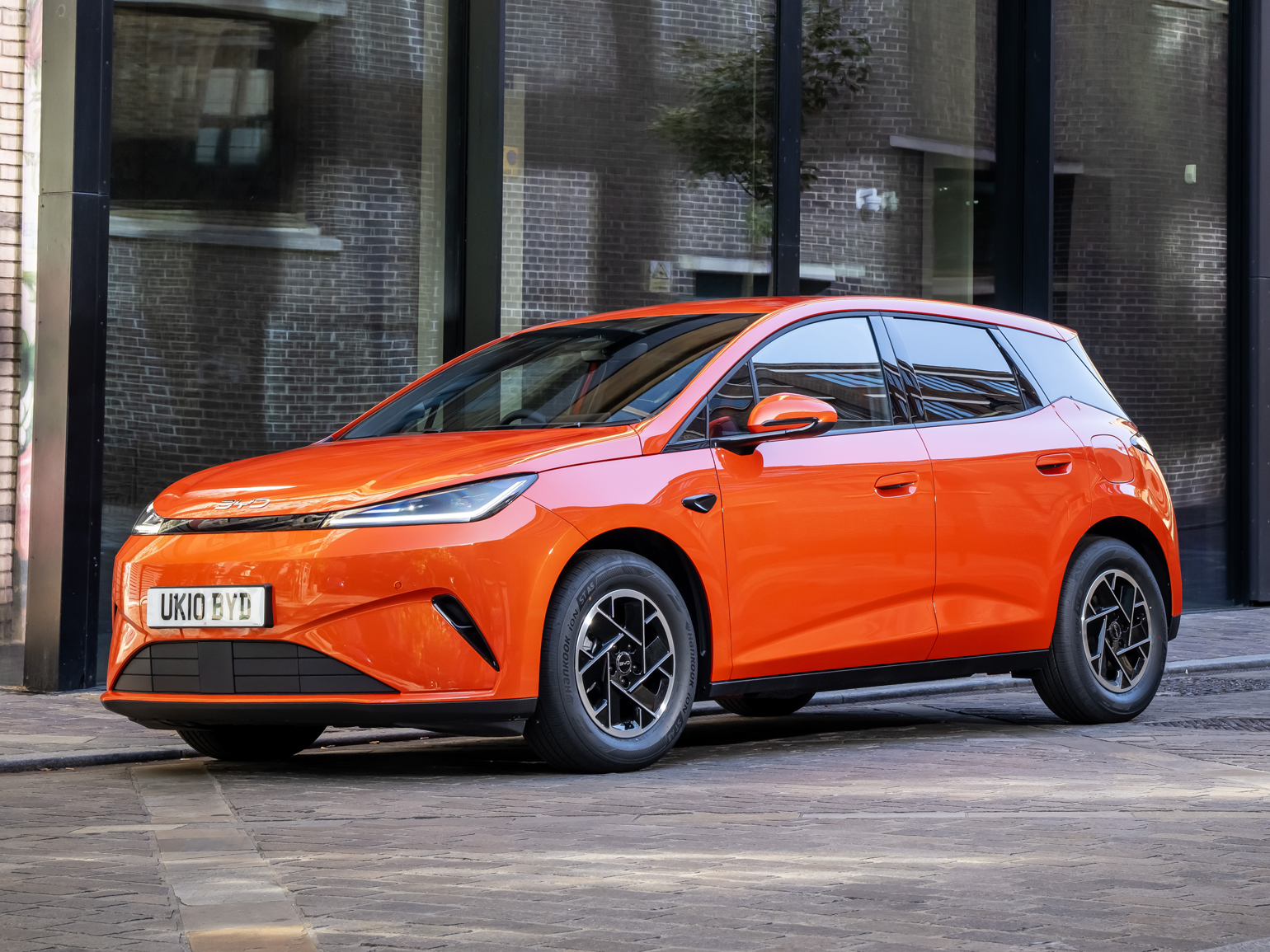
Are all Chinese cars electric?
Published 30th September 2026
Chinese car brands have become a much more familiar sight on UK roads, with manufacturers including BYD, Omoda, Jaecoo and Chery joining the already established Chinese-owned MG. But their rapid arrival has also created a few misconceptions, perhaps the biggest being that choosing a Chinese car automatically means choosing an electric one.
We can categorically confirm, it doesn’t. A Chinese car really doesn’t have to be electric.
While China’s growing automotive industry has become strongly associated with electric vehicles, individual Chinese manufacturers are actually offering UK drivers a much broader choice. Depending on the brand and model, that can include traditional petrol engines, petrol-electric hybrids and plug-in hybrids alongside fully electric cars.
For lease customers that means if you like the price, specification or styling of one of the latest Chinese models but aren't ready to make the switch to an EV, there may well be an alternative already out there.
That doesn’t mean there isn't a good reason for the confusion
Many of the Chinese models that initially attracted attention in Britain were electric, even if that’s no longer the case. BYD, for example, established itself here with EVs including the Atto 3, Dolphin and Seal, while Chinese-owned MG enjoyed considerable success with electric models such as the MG4.
Several newer manufacturers have followed a similar path, so it is understandable that Chinese cars and electric cars have become closely associated in the minds of some drivers. The market has developed quickly, though, and today's choice is considerably broader than many people might realise.
Perhaps the simplest way to dispel the myth is to look at Omoda.
The Omoda 5 is available with a conventional petrol engine, meaning there's no need to plug it in and no need to change the way you refuel your car. In fact, there’s no reason to think of many Chinese cars any differently than you’ve always thought about any other car you’ve driven.
The Omoda range also extends to hybrid models as well as the fully electric alternatives, giving drivers a choice of powertrains rather than forcing them down a particular route.
Jaecoo takes a similarly broad approach. Its UK range includes petrol models alongside electrified alternatives, demonstrating that the new generation of Chinese manufacturers isn't concentrating exclusively on EVs. Chery has also entered the UK with a combination of petrol and plug-in hybrid models across its Tiggo SUV range.
For drivers who simply want a competitively priced, well-equipped new car, there is therefore no requirement to choose electric just because the badge on the bonnet comes from a Chinese manufacturer.
In fact, one of the most interesting developments among Chinese manufacturers has been the growth of plug-in hybrids.
They’ve been around long enough now that all of us understand the principle of a plug-in powertrain’s combination of electric motor and rechargeable battery with a petrol engine. Charge them regularly and shorter journeys can potentially be completed using electric power, while the petrol engine sits quietly in the background ready to make itself available for longer journeys as required.
Plug-in hybrids currently offer the best features of both internal combustion and electricity to the widest possible range of UK drivers.
BYD is a particularly good example because its UK range now stretches well beyond pure EVs. Lease customers can choose electric models including the Dolphin, Seal and Sealion 7, while plug-in hybrid alternatives include the Seal U and Seal 6 Touring. That choice provides an important middle ground for drivers attracted by electric driving, but who don't yet want to rely entirely on public and home charging.
Thanks to the varying approaches followed by different manufacturers, there are alternatives among the hybrids too.
There’s no single type of Chinese car
Unlike a plug-in hybrid, a conventional petrol-electric or ‘self-charging’ hybrid doesn't need to be connected to a charger. Instead, its battery is replenished while the car is being driven, allowing the electric motor to assist the petrol engine and freeing the driver from the need to rely on the charging network – not to mention the seemingly unavoidable task of untangling charging cables that the modern world likes to inflict.
It's yet another indication that talking about a single type of ‘Chinese car’ is becoming increasingly meaningless.
The choice of powertrains offered by Chinese manufacturers is beginning to look much like the choice available from the long-established European, Japanese and Korean brands that we’ve been driving for years.
Should the powertrain matter more than where the car comes from then?
For lease customers, that's arguably a more useful way to look at the rapidly expanding selection of Chinese cars on the market.
If you can conveniently charge at home and most of your driving suits an EV, one of the many fully electric Chinese models could make perfect sense. If you like the idea of completing some journeys electrically but regularly travel longer distances, a plug-in hybrid might provide a better balance. And if you simply don't want to plug your car in at all, the arrival of petrol and hybrid models means that doesn't automatically rule out a Chinese manufacturer either.
The important thing is to consider how and where you drive, how many miles you cover and whether you have convenient access to charging before deciding which powertrain is right for you.
So, are all Chinese cars electric? As you’ve probably gathered by now, that couldn’t be further from the truth
Electric cars remain an important part of the growing choice China's cutting-edge automotive industry has brought to the UK, but they're really only one part of an ongoing story. With petrol, hybrid and plug-in hybrid alternatives appearing alongside the growing selection of Chinese EVs, lease customers now have considerably more choice than the familiar stereotype might suggest.
In reality, that stereotype itself is already out of date, and it’s only a matter of time before the rest of the car market catches up to that fact.
Related articles
9th Oct 2026
22nd Sep 2026