

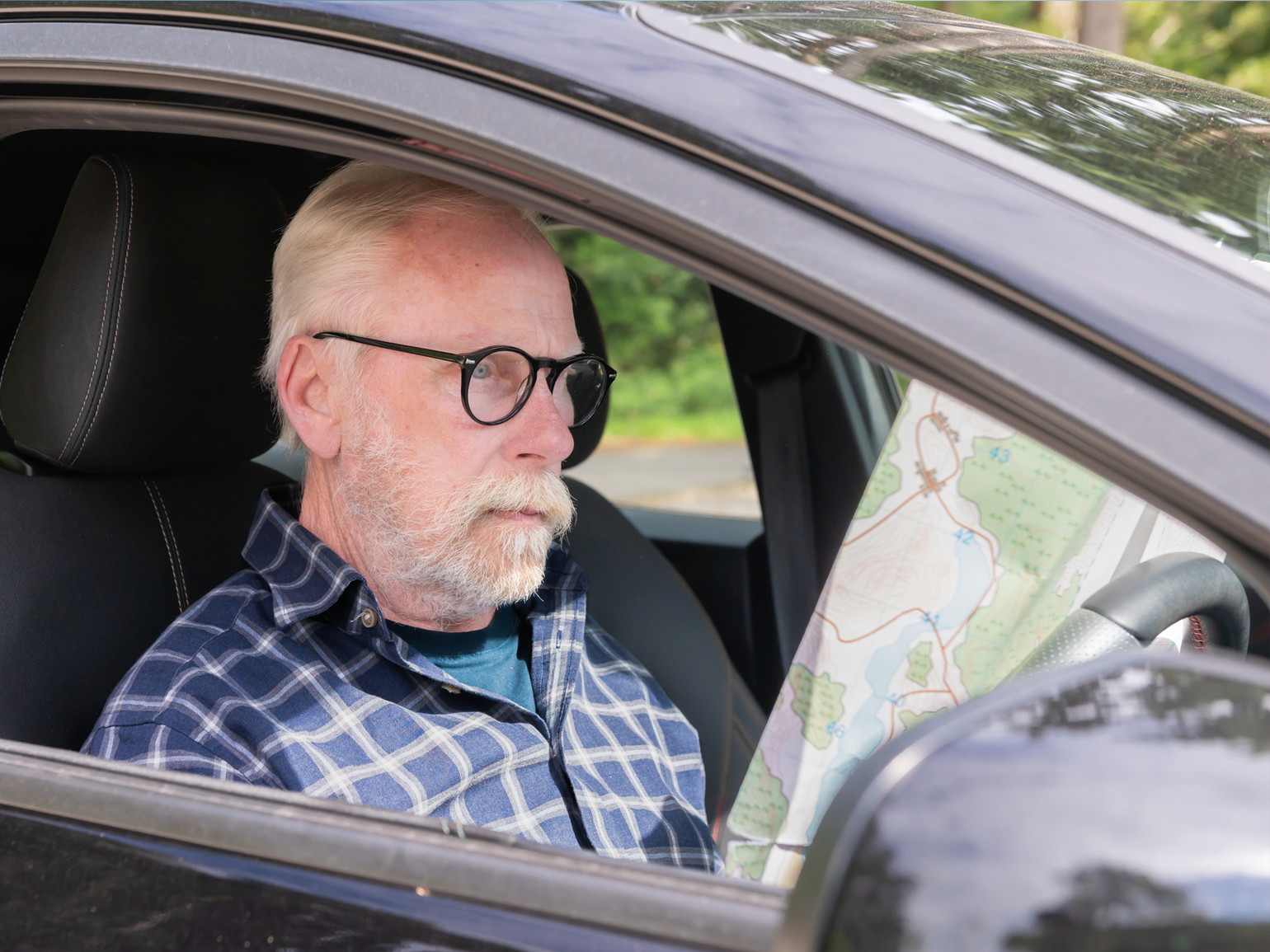
Long live the humble map
Published 18th March 2026
There’s no denying that modern life has been simplified by a wide range of gadgets designed to make things as convenient as possible. Our houses are full of them, we carry them around in our pockets, and of course, they also feature in our cars. And yet, not one of those gadgets denied the people of Essex the recent amusement of seeing a stranded delivery van attempting to hold back the tide, a task that King Cnut knew was impossible over 1000 years ago.
The unfortunate driver was reportedly following GPS guidance.
And it’s fair to say that, anecdotally at least, it’s definitely not the first time something similar has occurred, and it’s unlikely to be the last.
Or is it?
With timing that couldn’t have been more serendipitous if you tried, while we were watching a delivery van succumb to the tide, new research was revealing that British drivers may not be as digitally dependent as many assume. In an era dominated by smartphone navigation, built-in sat nav screens and constant digital guidance, new research from Warrantywise has revealed that millions of motorists still prefer a physical map to switching on a screen.
A recent poll of 2,000 UK drivers found that almost a fifth (16%) still rely on a paper map as their primary navigation tool.
This preference for traditional navigation makes a little bit of sense when you consider the complexity of many UK roads. With historic towns, rural routes and varied signage, a paper map never loses signal, never runs out of battery and continues to work regardless of what is happening on the dashboard. As navigation becomes increasingly screen-based, the research suggests many drivers still prefer to keep a folded paper map on the passenger seat… just in case.
It’s true that most drivers inevitably follow the digital route, with 54% favouring Google or Apple Maps, 21% opting for other software such as Waze, and a further 36% relying on their car’s in-built system. A surprising 15% are still using standalone devices from the likes of TomTom and Garmin as well.
While the data shows the expected digital dominance, the surprise is not that the high-tech gadgets lead the way, but that the low-tech paper maps remain widely trusted.
And widely trusted is an excellent description too.
Nearly a quarter (24%) of those who prefer an old-fashioned map are aged 65 and over, suggesting that for many older drivers, paper navigation remains the most trusted way to get from A to B. However, the data also reveals this isn’t a simple generational divide, with the second most common age group (representing 18% of map users) being 18-24-year-olds. The appeal of a paper map appears to span both ends of the driving age spectrum, and no doubt many of them even know how to fold one properly too.
And finally, one other interesting little nugget of potentially useful information was also revealed in the survey, and that is the 6% of UK drivers who said they don’t use any navigation tools at all.
We’re not sure where they’re going with that approach, and the chances are, neither do they, so next time you’re stuck behind someone who doesn’t appear to have the faintest clue where they are going, at least now you’ll know why.
Related articles

30th Apr 2026

27th Apr 2026
22nd Apr 2026