


Polestar first to introduce new ‘Live Lane Navigation’ feature
Published 10th November 2025
Cars that feature ‘over-the-air updates’ are still relatively recent additions to the market. We’ve all grown accustomed to using the same basic principle to keep our electronic devices up to date or to add new apps, but in the real world, is it really such a big deal if our cars can do the same thing? Well, it is if you really don’t like getting lost, a point amply demonstrated by Polestar’s recent announcement regarding the addition of a new live lane guidance feature to its in-car navigation system.
The Swedish premium EV brand is set to become the first automotive OEM to integrate Google Maps’ new live lane guidance into the driver display of one of its vehicles, helping drivers stay on course with ease while navigating complex highways and intense rush-hour traffic.
As you may have already noted, the new live lane guidance isn’t Polestar’s technology, but a new navigation feature that Google has developed for its ‘Maps’ app.
Polestar has been working closely with Google for the last five years, collaborating on many features that already appear across its model range, as well as putting it in pole position to be the first to introduce this new technology to one of its models.
How does live lane work?
Google's new live lane feature utilises the car’s forward-facing cameras to detect which lane the car is in, using its advanced AI to analyse elements on the road, like lane markings and road signs. Drivers experience a new visualisation on the car’s infotainment screen that highlights all possible lanes for the chosen route, including which lane the car is in. It can also deliver visual and audio reminders to help drivers ensure they’re in the correct lane in plenty of time for the next junction, something that would be undeniably useful when you’re driving around somewhere you’ve never been before.

And the premiere of the new live lane guidance will soon be appearing on the 10.2-inch driver display of the Polestar 4, reducing stress and improving safety by making missed exits and last-minute lane changes much less of a worry.
Andrew Foster, Director of Product Management for Google Maps says: “Polestar has been a close partner since 2020 when Polestar 2 launched as the first car with Google built-in. Now, Polestar 4 will be the first to integrate our groundbreaking live lane guidance which will help people drive with even more confidence and set a new benchmark for navigation across the auto industry.”
Over the air updates
And to bring us neatly back to the original point, Polestar’s integration of Google Maps’ live lane guidance is part of a promise to continuously upgrade its cars with innovative features as they become available through over-the-air updates.
The Polestar 4 may have been marked out as the first to receive this new feature, but with four models in its current lineup – Polestar 2, Polestar 3, the aforementioned Polestar 4, and Polestar 5 - and two more in the pipeline in the shape of the Polestar 6 roadster and Polestar 7 compact SUV, it’s unlikely to be the last. Which is kind of the point of over-the-air updates in a car.
Automotive technology is evolving all the time, far too quickly for every new development to be added during the regular production cycle. In many cases, new technology has no choice but to wait for a new model before it can enter the market. Not in all cases though, especially when it comes to new features that don't require a visit to a trained vehicle technician with a high-tech toolbox.
Essentially, the ability to offer over-the-air updates like this means the car you lease today could actually be less well equipped than the one you hand back at the end of the term.
Related Offers
Polestar 4
4 Electric 400kW 100kWh Long Range Dual Motor Prime
£532.79
inc VAT p/m
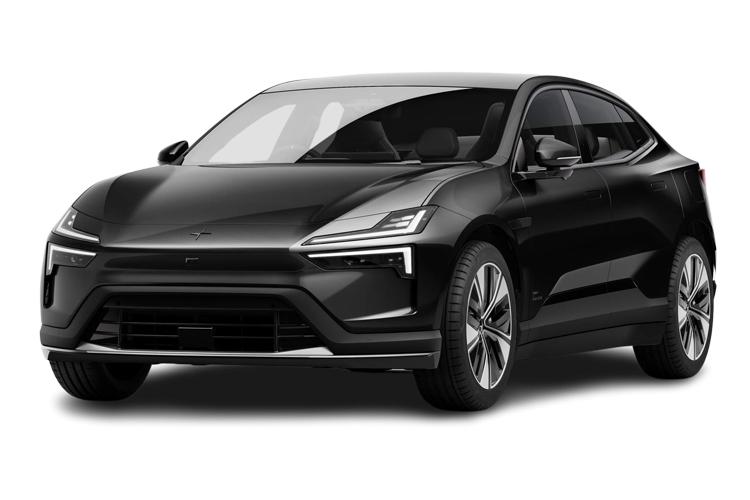
Polestar 4
4 Electric 400kW 100kWh Long Range Dual Motor Plus
£541.12
inc VAT p/m
Polestar 4
4 Electric 400kW 100kWh Long Range Dual Motor Plus Performance
£575.47
inc VAT p/m
Related articles

27th Apr 2026
22nd Apr 2026

14th Apr 2026