Vauxhall uses AI to shed light on the future of autonomous vehicles
Published 18th November 2025
If you’re relying on the general level of knowledge surrounding the technology, you’d be forgiven for thinking that AI is either a useful tool for misrepresenting reality for a variety of nefarious purposes, or computers are going to take over the world and wipe out/enslave humanity. In reality, AI is helping to design car headlights. Or at least, that’s one of the things Vauxhall is using it for.
This year’s International Symposium on Automotive Lighting (ISAL) - no, we weren’t invited either – saw Vauxhall reveal a special version of its Grandland SUV to demonstrate ways autonomous vehicles could use their lights to communicate.
Vauxhall is no stranger to pioneering new lighting technologies, with a whole range of clever LED headlight systems already available in various Vauxhall models. Headlights aren't just about enhancing visibility though.Vauxhall also understands the impact lighting technology can have on creating safer roads, and it has been working on a forward-looking concept that would allow automated vehicles to use light for communicating with pedestrians and other road users.
The latest LED lighting signatures are easily controlled and animated, from flashing a simple pattern when indicating, to intelligent systems that can identify oncoming vehicles and automatically redirect the light to avoid dazzling other drivers. By using these existing lighting elements, Vauxhall is demonstrating how easy it could be to add communication features into autonomous vehicles.
And that is where the AI part comes in.
To demonstrate what cars of the future could be capable of, Vauxhall fitted a camera system to the Grandland test vehicle and employed AI to teach the car to recognise potentially dangerous situations such as a child chasing a ball onto the road or a pedestrian stepping out from between parked cars.


How AI enhances Vauxhall’s safety systems
The AI not only allows the car to “see” the danger via the cameras, but it also factors in something called intention prediction that means the car can act based on what might happen in a few seconds time, which is essentially the same way our brains figure this stuff out while we’re driving.
The key was to tie that all together with some reprogrammed lighting.
While the lights generally remain the same (white at the front, red at the back), the front and rear indicators are permanently illuminated in cyan, making the car more easily noticeable to other road users. If the camera system detects a pedestrian in the path of the vehicle, the signature lighting then changes to magenta, visually notifying the pedestrian that the car is approaching. At the same time, the vehicle will start to brake in anticipation, and once stationary, the car’s lighting signature then changes to green to indicate to the pedestrian that the car has recognised the danger and it is now safe for them to cross.
While we’re not quite at the stage of having roads full of automated vehicles yet, the fact the technology to make that possible already exists makes it somewhat inevitable that it will become a reality sooner or later.
AI will play a huge role in developing that technology in the future, but it’s the detail of things like innovative lighting signatures that reflect Vauxhall’s commitment to accessible, intelligent safety for all road users while simultaneously building trust in autonomous vehicles.
Related Offers
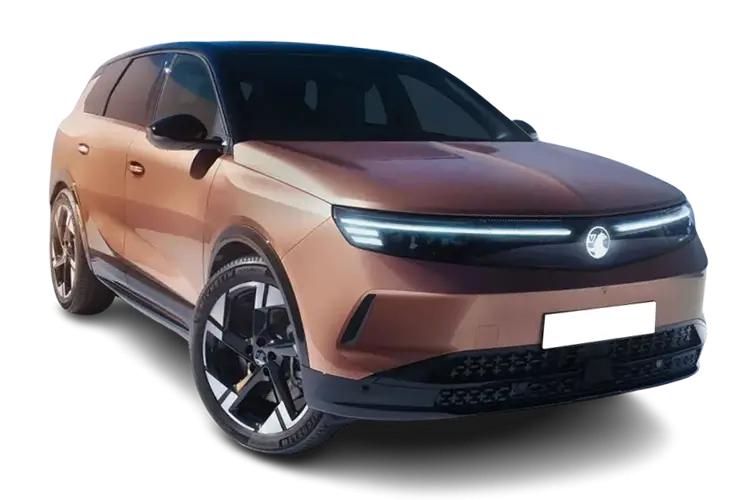
Vauxhall Grandland
1.2 Turbo Hybrid Ultimate e-DCT6 F/Rf
£354.85 per month (inc VAT)
£3,193.67 Initial payment
60 month contract
5,000 miles p/a
Vauxhall Grandland
1.2 Turbo Hybrid 145 GS e-DCT6
£347.86 per month (inc VAT)
£3,130.70 Initial payment
48 month contract
5,000 miles p/a
Vauxhall Grandland
1.2 Turbo Hybrid 145 Design e-DCT6
£407.53 per month (inc VAT)
£3,667.79 Initial payment
60 month contract
5,000 miles p/a
Related articles
11th Aug 2021
1st Feb 2023