Renault 5 E-Tech vs Citroën E-C3: Which comes out on top?
Published 9th May 2025
It’s a French off! Both Renault and Citroen have recently released their take on the affordable everyday electric vehicle (EV), but which is best? There’s only one way to find out.
Grab your baguettes and brace yourself as we pit the Renault 5 E-Tech vs the Citroen E-C3, examining everything from design to leasingcosts.
If you’ve already got your eye on one of our contenders, make sure to check out our leasing deals for both the 5 E-Tech and the E-C3.

What is the Renault 5 E-Tech?
In a word? Nostalgia. The Renault 5 E-Tech is a revival of the original and much-loved Renault 5, which was first launched in 1972. The EV's comeback carries over a host of design cues from the original, including the flared rear arches, distinctive taillights, and compact dimensions, but underneath, everything is completely new.

What is the Citroën E-C3?
The Citroen E-C3 is one of the most affordable EVs on the market today, with lease deals starting at under £200 per month. It’s the flagship of a new breed of EVs, created to open up the market to a broader range of buyers with no-frills, practical and accessible electric motoring.
The E-C3 sacrifices on performance and range in the name of a wallet-friendly price point but comes equipped with everything you could possibly need for your day-to-day.
Renault 5 E-Tech vs Citroën E-C3: the rundown
1. Design and styling
Design is a very personal thing, and neither of these EVs is hard on the eyes. The Renault 5 E-Tech is laced with nostalgic design cues and an undeniable character that makes it appear cute but with an edge – like a puppy that bites every now and then.
The Citroen E-C3 is true to the latest iteration of Citroen’s design language, with a distinctive headlamp arrangement, sleek body lines and stylish alloy wheels that make for an overall handsome machine.
2. Performance and driving experience
When it comes to the Renault 5 E-Tech vs the Citroen E-C3, performance varies widely. The EV platform on which the charming E-Tech sits is entirely new and offers power options from 121 bhp to 148 bhp – pretty punchy for a car this light. It’s also packed with competent suspension and disc brakes all round for a spritely, manageable driving experience.
The Citroen, however, has forgone some of its performance credentials in favour of a more affordable price tag, with just 111 bhp. It does have an ace in the hole though: comfort. Citroens have long been renowned for their ride quality, and the E-C3 is no exception. It comes equipped with their ‘Advanced Comfort’ suspension system, giving it smooth, all-day comfort on any surface at any speed.
3. Battery, range and charging
Another gulf appears when you examine battery power and range. The E-Tech has a maximum quoted range of 252 miles, provided you splash for the ‘Comfort Range’ spec and can charge from 15% battery to 80% in just 30 minutes with 100 kW fast charging. The base model battery, the ‘Urban Range’, tops out at 190 miles per charge but also comes with a 30-minute fast charge time.
The E-C3, however, has a smaller quoted range of 188 miles but can also be recharged in a similarly quick time. But once again, it’s important to bear in mind that budget-friendly starting price. It’s also expected that a larger battery model will be released later in 2025, with a range of around 250 miles, which for the price, would put it ahead of the E-Tech.
4. Interior tech and features
When you step inside, neither car is short on tech or comfort. The 5 E-Tech features two displays, a 7” for the instrument cluster and a 10.3” for the infotainment, with dials underneath for important on-the-go functions such as climate control. The finish quality is good throughout, and you also get a whole world of driver convenience and safety tech, including intelligent speed assistance, emergency lane keeping assist and much more.
Despite the lower price point, the E-C3 is hardly sparse either. Its instrument cluster is recessed into the dash in a tidy display and infotainment is controlled via a 10.25” touchscreen. While there are some compromises made on material choices, everything you interact with feels quality and the dash is finished in an attractive fabric material, giving an overall pleasant experience.
5. Practicality and space
In the battle of the Renault 5 E-Tech vs the Citroen E-C3, the space and practicality category is the E-Tech’s turn to be humble. Its more compact size comes at a cost, meaning it has less interior space and boot capacity. It’s by no means short on either, but the E-C3 outcompetes it by some 200 L of valuable space.
The E-Tech’s relatively diminutive stature does of course mean that it’s likely to be a little easier to manoeuvre through tight city streets, though and should make parking a doddle.
6. Price and value for money
Both the E-Tech and the E-C3 are in pole position for some of the most budget-friendly EVs available today, but the Renault’s stronger performance figures come at a cost. To purchase outright, the Citroen starts at a very economical £22,990, and punching in at a whopping £5 more, is the base model E-Tech.
However, even in its swankiest trim level, the E-C3 won’t dent your account by any more than £23,795, whereas to get a similarly upgraded E-Tech with the extended battery range will set you back by almost £30,000.
7. Which is better for leasing?
Thanks to low initial price points and high demand keeping depreciation values to a minimum, both the Citroen and the Renault make for affordable leasing prospects.
Lease deals for the E-C3 start at just under £200 per month and the E-Tech at a little under £250 per month. Although, to get the extended battery range of the E-Tech ‘Comfort Range’, you’ll likely be paying closer to £300 per month or more, depending on the trim level.
Verdict: Renault 5 E-Tech or Citroën E-C3?
So, Renault 5 E-Tech vs Citroen E-C3, which takes the golden beret? At Gateway2Lease, we’re fond of both these characterful EVs, but each has its strengths.
The Renault 5 E-Tech is quicker, handles more competently, goes further and is arguably more stylish. However, it comes at a higher price and doesn’t have as much interior space, due to its smaller body size.
The Citroen E-C3, on the other hand, is larger, more practical, affordable and very comfortable to drive. The trade-offs are less power and a smaller battery.
Which one is right for you depends on your budget and priorities, but you’re unlikely to be disappointed with either.
Explore electric car leasing at Gateway2Lease
Find your perfect electric car lease deal with Gateway2Lease. We offer competitive, personalised packages on a huge range of EVs from a vast selection of leading manufacturers. Whether you choose the E-Tech, the E-C3 or have something else in mind, we can help.
We’re a family-run lease provider with almost 20 years of experience and outstanding customer ratings. Get behind the wheel of your dream car in no time by calling our friendly team on 01299 407 360, emailing enquiries@gateway2lease.com or filling out our contact form.
Renault 5 E-Tech vs Citroën E-C3 FAQs
Does the Citroën EC3 have a heat pump?
No, the Citroen E-C3 does not come with a heat pump in any trim level, which can reduce its range in colder temperatures. The Renault 5 E-Tech, however, comes with a heat pump as standard, helping it maintain more of its range even when temperatures drop.
What is the range of the Renault 5 E-Tech?
The Renault 5 E-Tech's quoted base range is 190 miles, but it can go up to 252 miles if you opt for the ‘Comfort Range’ battery. By contrast, the E-C3 has a range of 188 miles, but a longer-range version is expected to be released later in 2025.
Are the Renault 5 E-Tech and Citroën E-C3 suitable for long-distance driving?
Neither car was designed to be a globetrotting grand tourer and both will be more at home in urban areas or making the daily commute. However, each can cover just under 200 miles, or 252 if you buy the ‘Comfort Range’ E-Tech, and can be charged from near empty to almost full in around 30 minutes. So, long distances certainly aren’t out of the question, provided you plan regular charging breaks.
Related Offers
Citroen C3
e-C3 83kW EV 44kWh Standard Range Max
£297.25 per month (inc VAT)
£2,675.27 Initial payment
48 month contract
6,000 miles p/a
Citroen C3
e-C3 83kW EV 44kWh Standard Range Max NI
£305.44 per month (inc VAT)
£2,748.92 Initial payment
60 month contract
5,000 miles p/a
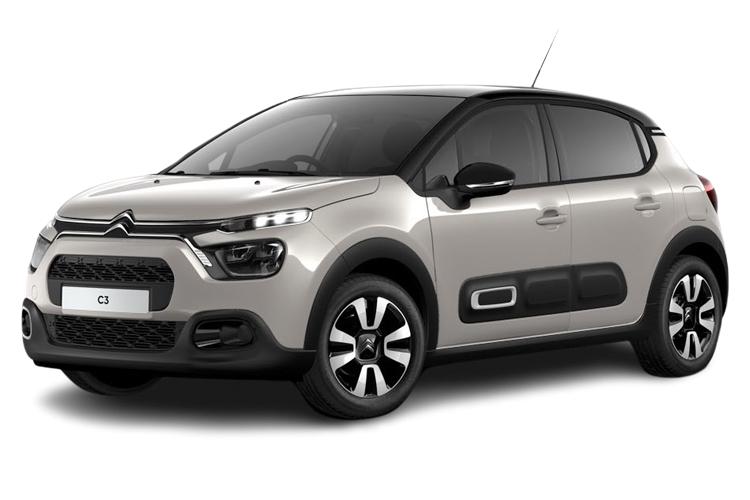
Citroen C3
1.2 Hybrid 110 Max e-DCS6
£290.39 per month (inc VAT)
£2,613.49 Initial payment
60 month contract
5,000 miles p/a
Related articles
18th Sep 2024